Hand Illustrated Line Patterns for Creative Projects
In a digital landscape saturated with perfectly generated, algorithmic graphics, there is a distinct hunger for the organic. Hand Illustrated Line Patterns answer that call by bringing a touch of human imperfection back into your design workflow. This collection is not just about adding texture; it is about infusing your work with authenticity. Whether you are designing a brand identity, creating educational materials, or developing a user interface, these manually crafted assets provide a natural flavor that stock vectors often lack.
The core philosophy behind this set is simplicity and versatility. It offers a curated selection of manually tileable line patterns available in several flavors and variations. The goal is to give you a variety to choose from so you can find the perfect fit for your specific project needs without spending hours tweaking vector paths or searching for the right texture. These illustrations offer a natural imperfect flavor due to their hand-illustrated process, ensuring that every stroke carries the subtle weight of a real artist's hand.
What Makes This Collection Unique?
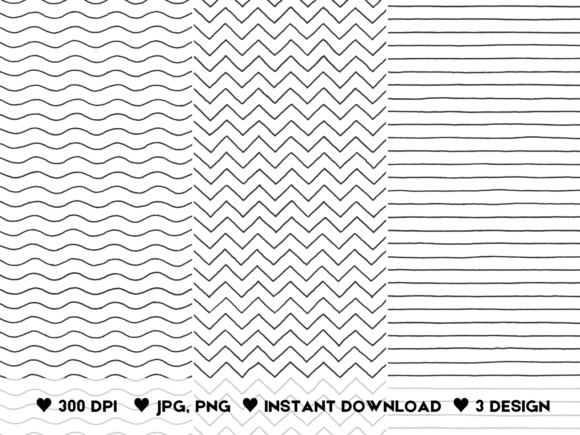
When you look at standard pattern libraries, you often see rigid, mathematically precise repetitions that can feel cold or sterile. Hand Illustrated Line Patterns breaks that mold. The collection features three unique foundational designs: chevrons, waves, and straight lines. Each of these classic motifs has been reimagined through a manual lens, resulting in slight variances in line thickness, spacing, and curvature that mimic the rhythm of drawing with a pen or brush.
To maximize flexibility, the collection includes two variations of each pattern, totaling six distinct designs. For every motif, you get a standard version and a reversed version. This distinction is crucial for designers who need to maintain visual hierarchy. Perhaps the standard chevron works well as a background, while the reversed version provides a striking contrast when overlaid on top of a solid color or another pattern. This duality allows for complex layering without needing to create new assets from scratch.
Technical Specifications for Seamless Integration
One of the most significant hurdles in using pattern packs is the technical setup. Many assets require complex editing to become seamless, which eats up valuable time. This collection solves that problem immediately. These patterns may be manually tiled in your favorite graphics editor for a seamless pattern result right out of the box. You do not need to spend time fixing edge artifacts or adjusting alignment points.
The file formats are provided to suit both print and high-resolution digital requirements:
- Vector EPS: Perfect for scaling to any size without loss of quality, ideal for large format printing or detailed vector work.
- High-Resolution PNG: Includes 48 megapixel files (approx. 8000 x 6000 px), offering immense detail for web graphics, social media banners, or high-DPI displays.
Furthermore, each pattern is provided in dark gray color with a fully transparent background. This neutral palette ensures that the lines integrate smoothly with almost any color scheme, allowing you to tint them or overlay them over images without clashing.
Real-World Applications Across Industries
The utility of Hand Illustrated Line Patterns extends far beyond simple decoration. Because of their clean yet organic nature, they serve as powerful tools in various professional and personal environments.
Branding and Identity Design
For entrepreneurs and business owners looking to establish a unique market presence, consistency is key. These patterns can be used to create distinctive brand assets. Imagine a startup logo where the background isn't a flat color but a subtle wave pattern that suggests movement and fluidity. Or consider a packaging design for an artisanal product where the chevron pattern adds a tactile, handcrafted feel that resonates with consumers seeking authenticity.
Digital Product Development
Marketers and web developers often struggle with making digital interfaces feel engaging without overwhelming the user. Hand Illustrated Line Patterns are excellent for UI/UX design. They can be used as subtle dividers between sections, background textures for cards, or accents in buttons. The reversed variations allow for dynamic interactions, such as changing the pattern direction on hover states to provide visual feedback to the user.
Educational and Publishing Materials
Educators, bloggers, and publishers know that text-heavy content can be daunting. Breaking up long articles or lesson plans with visually interesting elements improves readability and retention. Using these line patterns to frame quotes, separate chapters, or highlight key data points can transform a dry document into an inviting reading experience. The imperfect nature of the lines makes the material feel more approachable and less corporate.
Strategic Benefits for Your Workflow
Adopting these assets into your routine offers tangible benefits regarding efficiency and appearance. In the world of creative production, time is money. By utilizing pre-made, seamlessly tileable patterns, you eliminate the need to draw repetitive elements manually or purchase multiple individual assets.
Enhanced Communication: Visuals communicate faster than text. A well-placed pattern can signal a shift in tone or topic instantly. The dark gray color provides enough contrast to be seen clearly but remains subdued enough not to distract from the primary message.
User Experience (UX): In digital products, visual hierarchy guides the user. These patterns can act as subtle cues, helping users navigate through an app or website. The organic lines soften the hard edges of digital screens, making the overall experience feel more human-centric.
Productivity: For freelancers managing multiple clients, having a reliable library of versatile assets is essential. Instead of starting from zero for every project, you can quickly apply a chevron pattern to one client's deck and a wave pattern to another's website mockup, maintaining a high standard of quality with minimal effort.
Practical Considerations for Implementation
While these assets are designed for ease of use, getting the best results requires a thoughtful approach. When selecting a pattern, consider the context of its application. A busy background might overwhelm small text, so ensure you leave enough negative space or adjust the opacity of the pattern layer to maintain legibility.
If you are working in print, the vector EPS format is your best friend. It allows you to scale the pattern to billboard size without pixelation. However, if you are designing for mobile devices, the high-resolution PNGs are optimized to handle Retina displays, ensuring crisp lines on all screen densities.
Remember that the "imperfection" is a feature, not a bug. Do not try to force the lines into a grid system that contradicts their organic flow. Let the slight variations in the hand-drawn lines add character to your design. When combining these patterns with photography or illustrations, ensure the color balance remains consistent. Since the lines are dark gray, they pair exceptionally well with pastel tones, earthy colors, or stark black-and-white themes.
Ultimately, Hand Illustrated Line Patterns are more than just decorative elements; they are a bridge between the digital precision we demand and the human warmth we crave. By integrating these six versatile designs into your toolkit, you equip yourself with the means to create work that stands out for its authenticity and thoughtfulness. Whether you are a seasoned professional or a hobbyist exploring new creative avenues, these patterns offer a practical solution to elevate your visual storytelling.