20 Retro Dots Patterns: A Comprehensive Evaluation for Designers
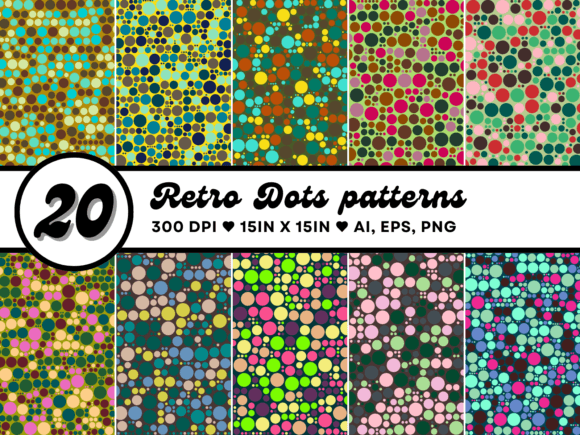
In the realm of digital and print design, visual texture plays a pivotal role in establishing mood and hierarchy. Among the various aesthetic options available, 20 Retro Dots Patterns has emerged as a versatile collection for professionals seeking a vintage yet modern look. This resource bundle is not merely a set of images; it is a comprehensive toolkit designed to streamline workflow while delivering high-fidelity results. For designers evaluating this asset pack, understanding its composition, technical specifications, and practical applications is essential before making a selection.
Understanding the Collection Composition
The core of this offering lies in its structured diversity. The package includes 20 Retro Dots Photoshop Patterns pat, which are vector-based or high-resolution raster tiles that repeat seamlessly. These patterns form the foundation for creating complex backgrounds without tiling artifacts. Complementing these are 20 Retro Dots Photoshop Styles asl. In the context of Adobe software, styles allow users to apply pre-configured layer effects—such as drop shadows, bevels, and gradients—to text or shapes with a single click.
Beyond the pattern and style files, the collection features 20 Plaid Background Textures JPG. These static images provide an alternative aesthetic option, offering a woven fabric look that contrasts well with the geometric precision of dots. All assets within this suite are delivered in High Resolution 300 DPI, ensuring they remain crisp when printed on large formats or viewed on high-density displays. The plaid textures specifically are provided at dimensions of 2500×2500px, a size that balances file manageability with sufficient detail for most standard design projects.
Technical Specifications and Installation
One of the primary considerations for any designer evaluating a new asset pack is the barrier to entry regarding installation. The documentation states that these resources are very simple to install and start using. Typically, this involves importing the .pat files into the Pattern Picker and the .asl files into the Styles panel within Photoshop. The inclusion of clear instructions mitigates the risk of user error, allowing immediate integration into existing workflows.
The resolution of 300 DPI is a critical factor for those working in print media. Unlike web-optimized graphics which often sit at 72 DPI, 300 DPI ensures that the dots and plaid textures maintain their sharpness when transferred to physical substrates like brochures, flyers, or magazine spreads. This specification suggests that the assets were created with professional output standards in mind, rather than being low-quality internet downloads resized for convenience.
Strategic Applications and Use Cases
The versatility of 20 Retro Dots Patterns makes it suitable for a wide array of multimedia applications. Because the patterns are seamless and high-resolution, they serve effectively as huge backgrounds for websites. When applied to web banners or landing pages, these designs can create depth without overwhelming the primary content.
- Print Media: The high resolution makes them ideal for magazines, brochures, and menus where tactile quality is perceived by the reader.
- Marketing Materials: Banners, flyers, and invitations benefit from the nostalgic appeal of retro aesthetics, which can evoke trust and familiarity in audiences.
- Digital Assets: Wallpapers and album covers utilize the bold contrast of dot patterns to create striking visual statements.
- Graphic Design Elements: The included styles allow for rapid prototyping of text treatments, making them valuable for quick-turnaround projects.
Evaluating Benefits and Tradeoffs
When comparing this bundle against purchasing individual assets or creating custom patterns from scratch, several benefits become apparent. The primary advantage is efficiency. Acquiring a cohesive set of 20 patterns and 20 styles saves significant time compared to sourcing disparate elements that may not harmonize visually. The consistency in the "Retro" theme ensures that a project maintains a unified voice throughout.
However, there are tradeoffs to consider. While the plaid textures are provided in JPG format, patterns and styles are proprietary formats specific to Adobe Creative Cloud. If a designer works primarily in non-Adobe software, such as Affinity Designer or Canva, the utility of the .pat and .asl files is limited unless converted. Furthermore, the reliance on a specific aesthetic (retro dots) means the assets may not fit every brand identity. A minimalist tech startup might find the busy nature of plaid and heavy dot patterns too distracting for their needs.
Situations Where This Resource Fits Best
This collection represents a strong fit for designers working on projects that require a sense of nostalgia or playful energy. It is particularly effective for brands targeting younger demographics who appreciate vintage trends, or for businesses aiming to stand out through unique typography backgrounds. Situations involving event planning, such as wedding invitations or party flyers, often leverage the charm of retro patterns to create a warm, inviting atmosphere.
Additionally, for developers building responsive websites, having a library of pre-made textures allows for rapid iteration on background designs. Instead of coding custom CSS gradients or sourcing stock photos, a developer can apply one of the 20 Retro Dots Patterns directly to the HTML structure, ensuring performance and visual consistency.
Considering Alternatives
While this bundle offers significant value, it is not the only solution available. Designers seeking infinite scalability might prefer SVG-based vector patterns over raster-based .pat files, as vectors do not lose quality regardless of zoom level. Similarly, if the goal is a completely unique brand identity, relying on a pre-packaged set of 20 patterns might result in a generic look that appears on multiple unrelated websites.
For users focused strictly on web performance, the 300 DPI resolution of the JPG textures might result in larger file sizes than necessary. In such cases, downsampling the images for web use would be required, adding an extra step to the workflow. Furthermore, designers looking for abstract or futuristic themes might find the retro aesthetic too dated for their current project requirements.
Practical Decision-Making Insights
To determine whether 20 Retro Dots Patterns aligns with your goals, assess your current workflow bottlenecks. If you frequently spend hours searching for compatible textures or struggling to create seamless repeats, this bundle offers a direct solution. Evaluate the frequency of your print work; if you regularly produce materials requiring 300 DPI quality, the inclusion of high-resolution assets justifies the investment.
Consider the longevity of your projects. If you are building a long-term brand identity, ensure that the retro style complements your logo and color palette. Conversely, if you are executing short-term campaigns or seasonal promotions, the variety offered by the 20 patterns and 20 styles provides ample flexibility to refresh designs without needing new assets.
Ultimately, the decision rests on the balance between speed and customization. This resource excels in providing speed and cohesion. By integrating these tools, designers can shift focus from technical execution to creative strategy, leveraging the included instructions and high-quality files to deliver polished results across web, print, and multimedia platforms.