Classic Watercolor Palm Tree Patterns: A Comprehensive Evaluation for Digital Designers
In the realm of digital design, few motifs capture the essence of relaxation and tropical elegance as effectively as palm trees. However, not all implementations of this classic theme are created equal. The Classic Watercolor Palm Tree Patterns collection represents a specific niche within the broader market of digital assets, distinguished by its adherence to traditional artistic techniques while meeting modern technical requirements. For professionals aged 20 to 50 who are evaluating resources for fabric printing, stationery creation, or sublimation projects, understanding the nuances of this collection is essential before making a purchase decision.
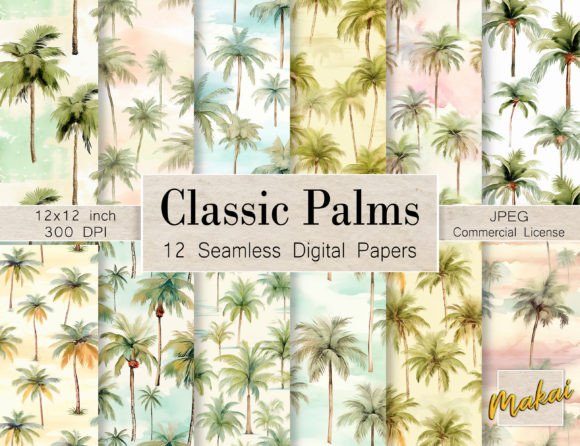
This resource is not merely a set of images; it is a curated suite of 12 seamless digital papers designed to offer a cohesive aesthetic experience. The collection, titled "Breeze into Classic Palms," focuses on capturing the timeless elegance of palms swaying in a gentle breeze. By utilizing soft, watercolor-inspired backdrops, the patterns avoid the harsh lines often found in vector-based clip art, instead offering a more organic, hand-painted feel. This distinction is critical for designers seeking to evoke a sense of serenity rather than just visual noise.
Technical Specifications and Format Versatility
One of the primary factors influencing a designer's choice of digital asset is file format and resolution. The Classic Watercolor Palm Tree Patterns are delivered in a highly practical configuration that bridges the gap between web graphics and high-end print production. Each pattern is provided as a JPEG file with dimensions of 3600 x 3600 pixels, which corresponds to a physical size of 12 x 12 inches at a resolution of 300 dpi.
The choice of JPEG format is significant here. While some competitors might offer PNG files with transparent backgrounds, the inclusion of a solid, illustrated background in these patterns suggests they are optimized for full-surface applications. The 300 dpi resolution is the industry standard for commercial printing, ensuring that when these designs are scaled up for large-format prints, such as upholstery or wall murals, the image remains crisp without pixelation. This makes the collection immediately viable for:
- Textile Design: The seamless nature allows for infinite tiling, which is crucial for fabric rolls where repeat patterns must align perfectly.
- Sublimation Projects: High-resolution JPEGs are ideal for heat transfer processes where color fidelity and detail retention are paramount.
- Stationery and Packaging: The 12x12 inch size is a standard base for scrapbooking and card design, allowing for easy manipulation in layout software.
However, users should note that because the files are JPEGs, they do not inherently possess transparency. If a project requires the palm trees to sit on top of another colored layer without a rectangular border, additional editing work would be required to isolate the elements, unlike some alternative vector-based packages.
Aesthetic Distinctions: Watercolor vs. Vector and Photorealism
When comparing Classic Watercolor Palm Tree Patterns to other available options, the most striking difference lies in the artistic style. The digital landscape offers three dominant categories for palm tree imagery: photorealistic photography, sharp vector graphics, and painterly watercolor styles. Each serves a different purpose, and the "Classic Palms" collection firmly occupies the third category.
Photorealistic Options tend to feature high-contrast lighting, deep shadows, and specific geographic details. While impressive, these can sometimes feel too literal or heavy-handed for projects requiring a soft, inviting atmosphere. They often lack the "breezy" quality that comes from implied movement and soft edges.
Vector Graphics offer clean lines and scalability but can appear sterile or overly geometric. For brands aiming for a boutique, artisanal, or handmade look, vectors may feel too rigid. The Classic Watercolor Palm Tree Patterns avoid this trap by simulating the bleed of paint on paper. The use of pastel hues—greens, blues, pinks, and yellows—creates a soothing palette that is distinctively calming.
This stylistic choice makes the collection particularly effective for audiences targeting wellness, lifestyle, and leisure markets. The soft gradients and blended colors evoke the feeling of a sunset over the ocean or a quiet morning in a garden, rather than the stark reality of a botanical illustration. This emotional resonance is a key selling point for designers creating content for social media, blogs, or packaging that needs to convey tranquility.
Evaluating Suitability: When to Choose This Collection
Deciding whether to incorporate the Classic Watercolor Palm Tree Patterns into a workflow depends heavily on the intended end-use and the desired brand voice. These patterns are best suited for projects that prioritize mood and texture over graphic precision.
For fabric prints, the seamless nature of the 12 included designs is a major advantage. The ability to tile the pattern without visible seams ensures that a dress, a curtain, or a bedspread looks uniform across the entire surface. The pastel color palette is also trending in current interior design, making these patterns a safe bet for home decor items that need to blend with existing neutral tones.
In the realm of stationery, the collection offers a sophisticated alternative to generic clip art. Creating invitations for beach weddings, summer festivals, or resort events benefits from the "tropical paradise" vibe. The watercolor texture adds a layer of perceived value, making the final product feel more bespoke and less mass-produced. Similarly, for sublimation projects, the high resolution ensures that the delicate brushstrokes of the watercolor effect are preserved during the transfer process, preventing the loss of fine detail.
However, there are scenarios where this collection might not be the optimal choice. If a designer requires bold, high-contrast graphics for a sports brand or a tech startup, the soft pastel hues and watercolor style may appear too gentle or dated. Additionally, if the project demands a single, isolated palm tree element to be placed on a complex background, the lack of a transparent background in the JPEG format could necessitate extra time spent masking out the design.
Comparative Analysis of Design Approaches
Understanding the tradeoffs of using Classic Watercolor Palm Tree Patterns involves looking at how it compares to building a custom library from scratch or purchasing a mixed-media bundle. Custom illustration offers total control but requires significant time and budget investment. Purchasing a mixed bundle might provide variety but often lacks the cohesive color story found in a dedicated collection like "Breeze into Classic Palms."
The strength of this specific collection lies in its cohesion. With 12 variations that share a consistent technique and color palette, designers can mix and match patterns within a single project without the visuals clashing. This is a common pitfall in DIY design, where combining disparate styles results in a disjointed final product. The "Classic Palms" approach ensures that every project maintains a unified identity, whether it is a series of greeting cards or a line of swimwear.
Furthermore, the resolution of 300 dpi places this collection above many free or low-cost stock options that are limited to 72 dpi (screen resolution). While some premium vector services offer higher scalability, the specific aesthetic of watercolor cannot be easily replicated in vector form without losing the organic charm that defines this collection. Therefore, for projects where texture and artistic feel are the primary drivers, this digital paper set offers a superior balance of cost, quality, and ease of use.
Conclusion on Selection Criteria
The decision to utilize the Classic Watercolor Palm Tree Patterns ultimately rests on the alignment between the project's goals and the collection's attributes. It is an excellent resource for designers who value the serene beauty of a tropical setting and require high-quality, print-ready files. The combination of 12 seamless patterns, professional resolution, and a soothing pastel palette makes it a versatile tool for fabric, stationery, and sublimation industries.
While it may not suit every design brief—particularly those requiring sharp, graphic, or transparent elements—it excels in its specific lane. For creators looking to add a touch of seaside charm and sophistication to their work, this collection provides a reliable foundation. By selecting assets that match the intended mood and technical specifications, designers can ensure their final products resonate with the target audience, turning simple digital files into tangible experiences of tropical tranquility.